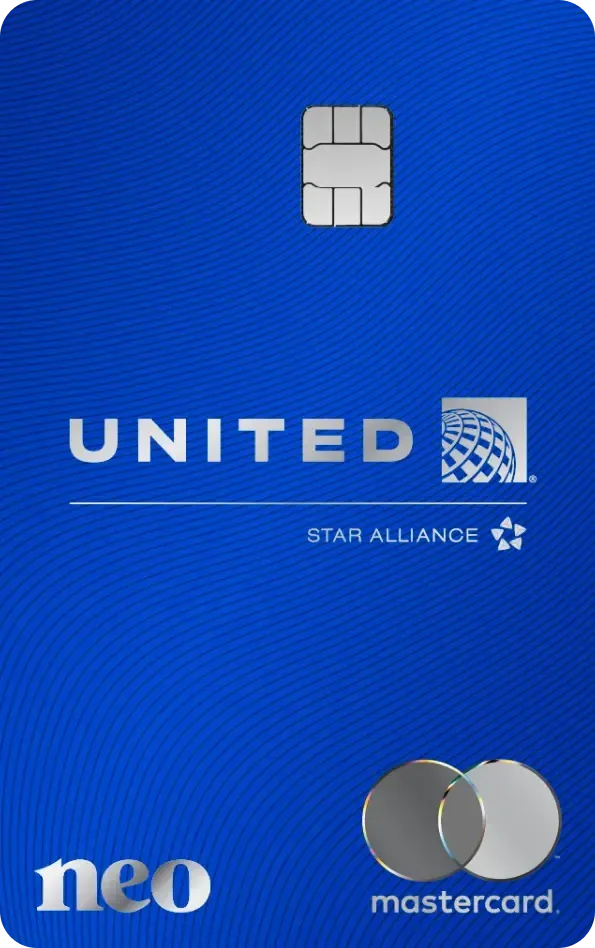
For years the only way a Canadian could put United miles to work was to earn Aeroplan and hope United's partner award space lined up. This card changes the entry point. It is the first co-branded United card sold in Canada, and the only one here that drops MileagePlus miles straight into your account. The issuer is Neo Financial, a Calgary app-first fintech that runs everything through its app rather than a branch network.
I want to be honest about who this is for. Most Canadians fly Air Canada, and for them Aeroplan is still the sensible home for points. This is the card I would point cross-border commuters and Star Alliance tinkerers to: people who route through United hubs, chase Saver seats Aeroplan cannot always find, and like having a second door into the same alliance.
Welcome offer
The welcome offer is worth up to 20,000 MileagePlus miles, split in two: 5,000 miles after your first purchase, then 15,000 more once you spend $3,000 within the first three months.
On top of that, Neo pays a 5,000-mile renewal bonus each year the account stays open and active, which is why the marketing headline reads up to 25,000 miles. Neo prints no end date, though it calls this a one-time offer for new cardholders and can change or withdraw it at any time. Miles usually post six to eight weeks after you meet the conditions.
The whole sign-up bonus hinges on one target: $3,000 in three months. That is roughly $1,000 a month, so route a bill cycle or a planned purchase through the card early and the 20,000 miles land without stretching your spending.
Fees & eligibility
The card runs $89 a year with no first-year waiver, and additional cards are free. As a World Elite Mastercard it asks for a personal income of $80,000 or household income of $150,000, a higher bar than most travel cards charging this fee.
One number to weigh before you travel with it: this is not a no-foreign-fee card, and its rate is worse than the norm. Neo charges a 3% foreign currency conversion fee on anything bought in another currency, above the 2.5% most Canadian cards apply. For a card built around cross-border flying that stings, so keep it for the United perks and pair it with a no-FX card like the Passport for actual spending abroad.
Earning rewards
Set your expectations here, because earning is the honest weak spot. The best rate is reserved for flights, and the base rate is below one mile per dollar:
Redeeming rewards
MileagePlus is a Star Alliance program, and that is the point of holding it from Canada. You can book Air Canada and any other Star Alliance carrier through United, and award flights on United's own metal carry no fuel surcharges, unlike some partners such as the Lufthansa group. Redemptions use dynamic pricing, so the same seat can swing widely in price, but Saver-level awards still surface at more predictable numbers.
The reason to earn United miles rather than simply defaulting to Aeroplan is availability. United and Aeroplan price and release Star Alliance award space differently, so a seat Aeroplan hides can show up bookable through United, and vice versa. Short US domestic hops can be found from around 5,000 to 7,500 miles one way, and partners like ANA, Swiss, and Lufthansa often release Saver space at fixed levels. Having both programs in reach means two chances at the same flight.
One note on a feature that is gone: United retired the Excursionist Perk, its free extra award segment, on August 21, 2025, so do not plan around it.
Perks & benefits
The perk that actually justifies the card is the award access. Cardholders get at least 10% off United award flights (15% with Premier status) and, more usefully, exclusive cardholder Saver Award availability, including premium seats that non-cardholders never see. If you fly United or Star Alliance on points, that hidden inventory is the draw.
The travel perks fill in around it. Your first checked bag is free on United-operated flights (this applies to the primary cardholder), and Group 2 priority boarding extends to you and family on the same reservation. There is a NEXUS credit up to $120 USD once every five years. Be clear-eyed about lounges, though: the card includes a Mastercard Travel Pass (DragonPass) membership giving access to participating lounges worldwide, but visits are pay-per-use, not complimentary, so this is not a lounge card.
Insurance
The insurance is underwritten by Chubb and covers the usual travel bases, but read the medical clause before you rely on it: emergency medical applies only to cardholders under age 60 and runs just the first 14 days of a trip, one of the tighter windows in the market. Neo's travel insurance is not available to Quebec residents at all. Treat this as a supplement, not a standalone travel policy, and confirm the terms on Neo's certificate of insurance before a trip.
My take
I do not reach for this as an everyday card, and I would not tell most Canadians to either. But for the right flyer it does something no other Canadian card can.
The base earn is weak, the 3% foreign currency fee is worse than average, and Neo runs everything through an app rather than the branch and phone support you get from a bank. None of that matters if you are buying the card for the reason it exists: a direct, Canadian-earned path to United miles, plus cardholder Saver space and an award discount you cannot get anywhere else in this country. Get it if you route through the US, fly Star Alliance often, and want award options Aeroplan cannot always surface. Skip it if Air Canada is your airline and Aeroplan already covers you, because a no-FX travel card or an Aeroplan card will serve you better for less.
The good
- Only Canadian card earning United miles directly
- Exclusive cardholder Saver award space
- Free first checked bag on United
The catch
- Weak 0.75x base earn rate
- Charges a 3% foreign currency fee
- App-only fintech servicing, no complimentary lounge visits