A friend of mine recently stayed at Aloft Playa del Carmen.
Everything was smooth, until he noticed the amount charged on his card seemed a little odd upon checking out.
You may be thinking… “Hah, yet another guy crying about resort fees, don’t travel if you can’t afford to pay those fees!”
Wrong.
This is far more ludicrous than a simple complaint about fees.
So what’s the story here?
Story Time 🍿
When my friend was booking Aloft Playa del Carmen on the Marriott app, it not only showed the price in USD but also made him book in USD, even though the hotel is in Mexico.
Here’s a quick example of the booking page on the Marriott app and the conversion rate.
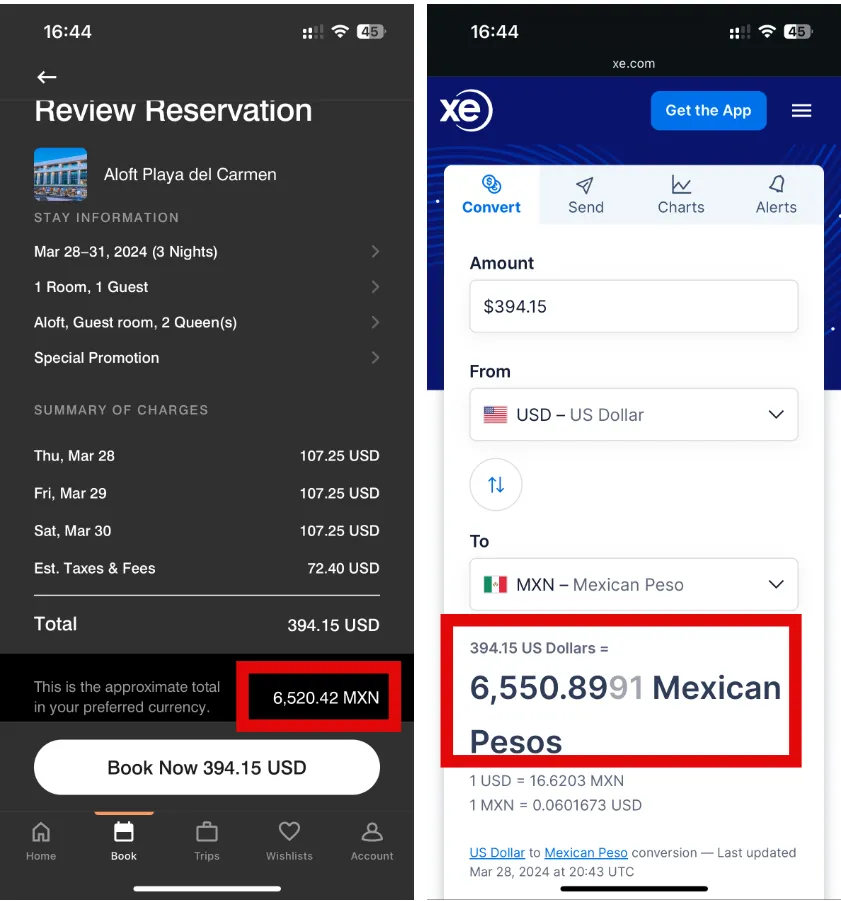
He didn’t give it much thought at the time of booking, as it showed him an approximate amount in MXN as a reference with a very reasonable conversion rate.
However, upon reaching the hotel, my friend encountered an unexpected hurdle:
The hotel could not process payments in USD, insisting settlement in MXN instead.
This policy seemed puzzling, leaving my friend to wonder why the system didn’t simply allow booking directly in MXN.
Anyway, no big deal, he already had the MXN reference in hand.
But here is where the drama starts.
Shockingly, the hotel applied an exorbitant conversion rate, resulting in a staggering 15% markup over the official exchange rate.
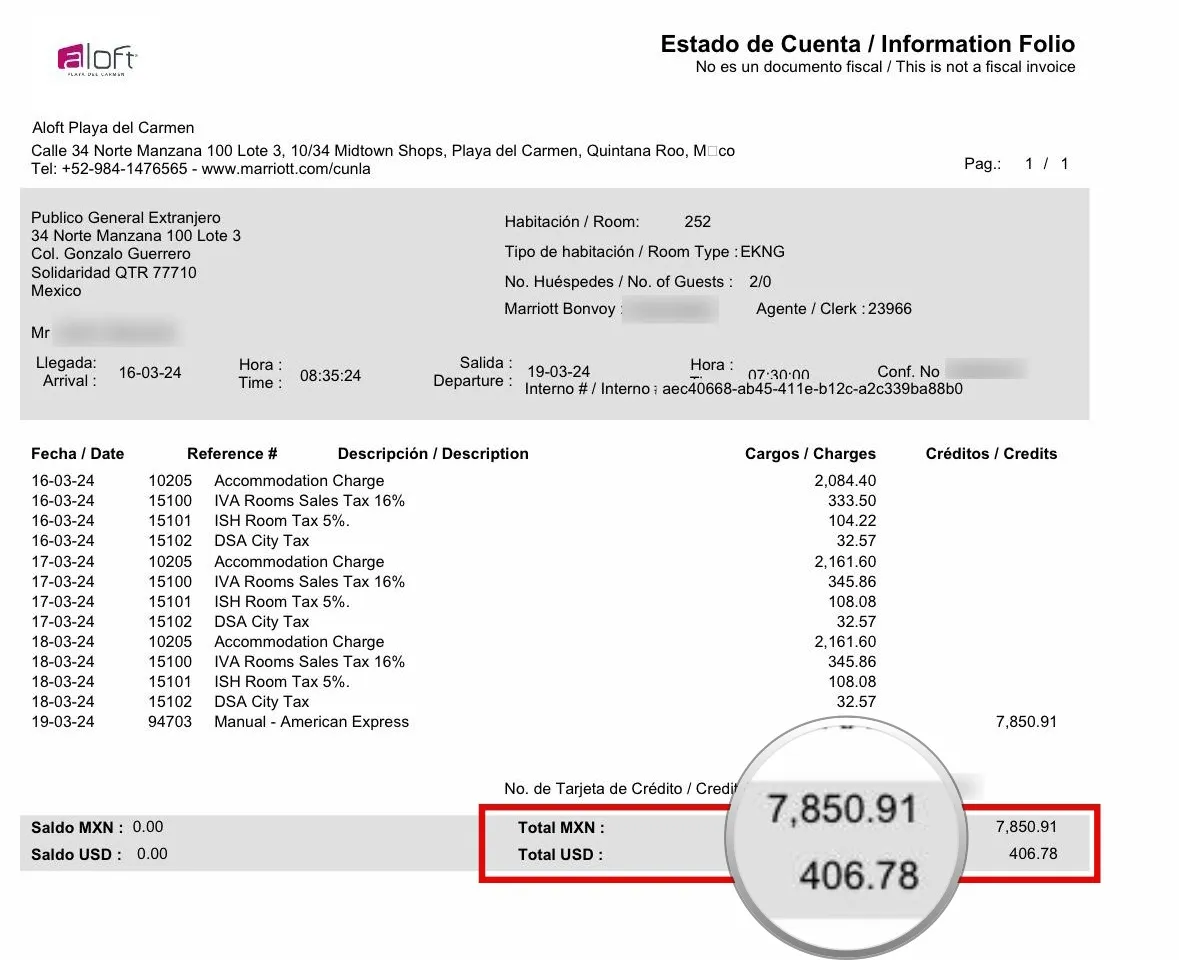
He made the reservation quoted at $406.78 (USD), and was astounded to find himself charged $470.72 (USD), representing a substantial difference of $63.94.
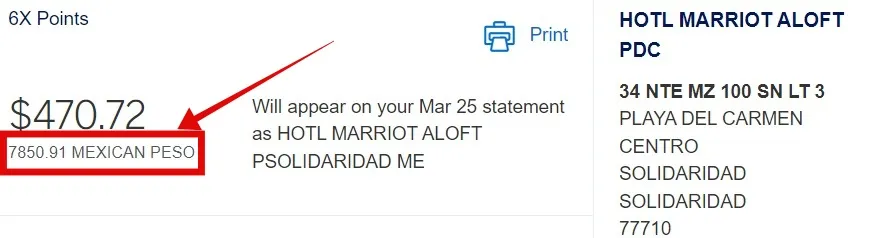
Upon reviewing the hotel invoice, he discovered that the hotel had converted $406.78 USD charge to 7,850.91 MXN.
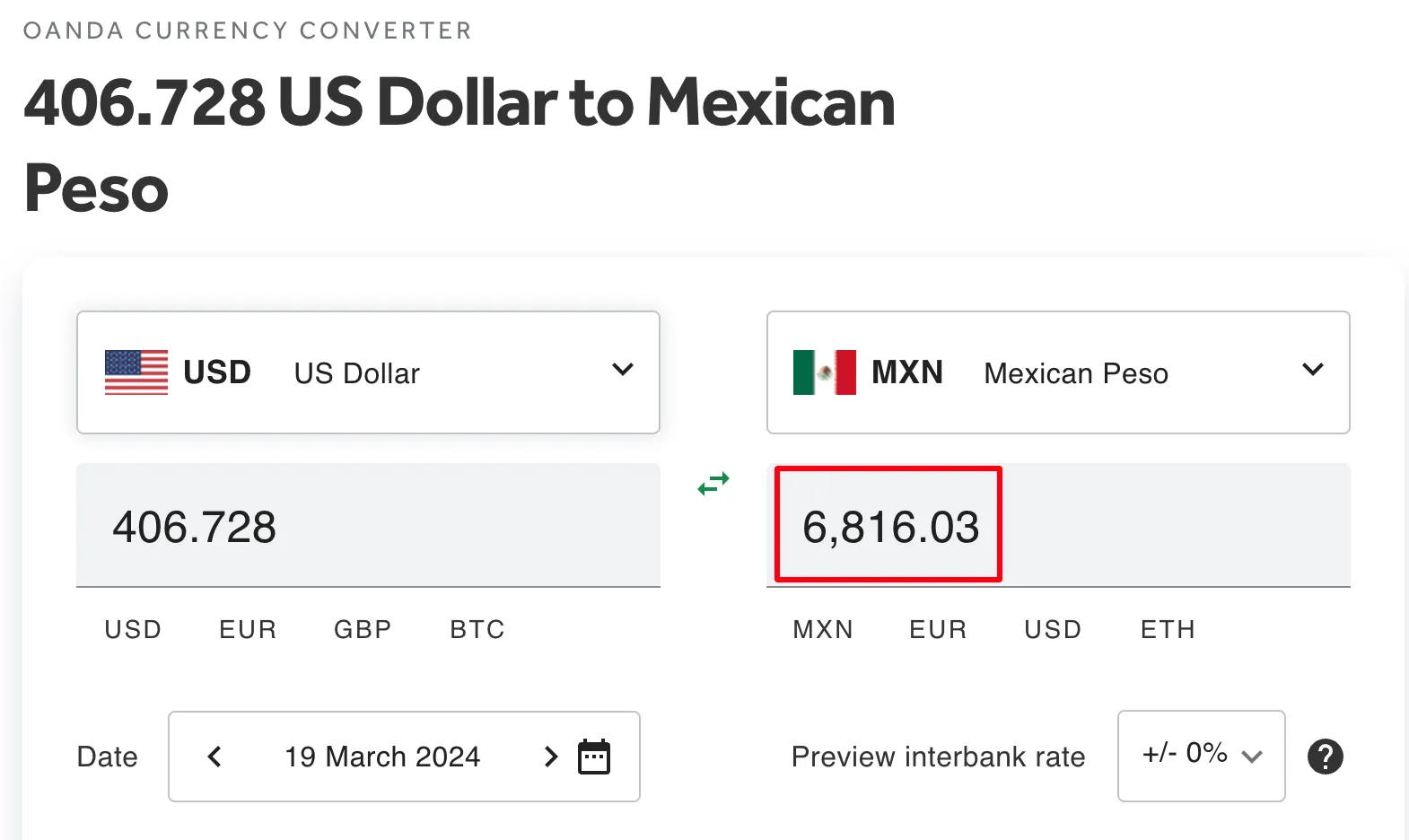
However, according to the currency exchange rates on that day, $406.78 USD should have amounted to around 6,816.03 MXN.
A jaw-dropping markup of over 15%, significantly higher than what one would reasonably expect.
To be fair, it’s not uncommon for hotels to seek additional revenue through currency conversion tactics.
Most people don’t have a thorough knowledge about currency conversions or care much about losing a few dollars while they’re on vacation.
Automatic charges in the guest’s card currency rather than the local currency are not unheard of, albeit not ideal.
However, in such cases, the markup typically ranges between 2-3%, which is already considered significant.
Therefore, the 15% markup observed in this instance stands out as exceptionally high, warranting further scrutiny.
Seriously, if big corporations like Marriott are letting hotels get away with 15% markup, what stops them from attempting a 20% markup to the next guest?
Upon checking reviews on Google Maps, it seems like there are many other guests who fell for the same trick.
Well, technically, EVERYONE is falling for this trick, but only a handful are recognizing it.
Serious question: how are Mexican locals booking this hotel?
Get the next one in your inbox.
One honest email every Thursday morning: the week’s deals, new posts and community threads.
Jayflyer Weekly, every Thursday: the week’s deals, new posts and community threads. Free, and you can unsubscribe anytime. Jayflyer · Jason Lee Studio.