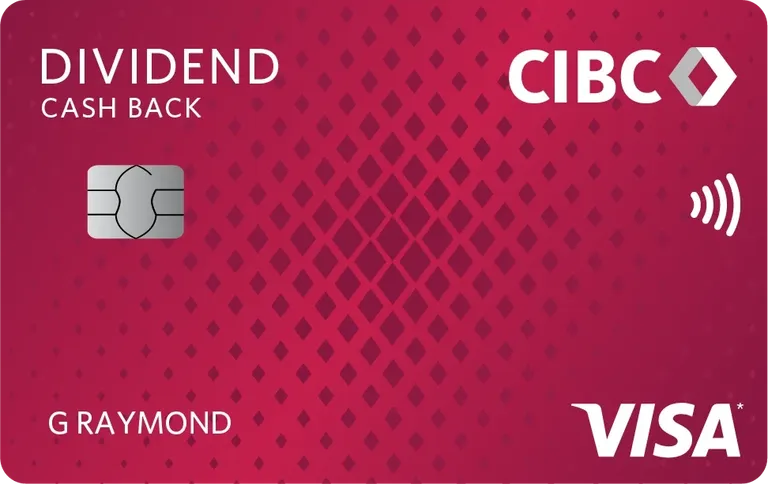
This is the card I'd suggest to a student who wants money back rather than points. It has the same earn rates as CIBC's regular Dividend Visa: 2% at grocery stores, 1% on gas, EV charging, local transit, dining, recurring bills and CIBC by Expedia travel, and 0.5% on everything else, with no annual fee.
What changes for students is the entry bar and the offer. There is no minimum income, the credit limit goes up to $5,000, and CIBC adds a welcome offer of up to $125 that the regular card does not show right now. From what I can tell, for most students spending a few hundred dollars a month, it is one of the simpler first cards to hold.
Welcome offer
CIBC is advertising up to $125 cash back on the student card, verified on the CIBC page on October 13, 2026, for new cards approved from July 16, 2026. You get $25 after a first purchase within the first 4 monthly statements, and 10% cash back on net purchases posted in those 4 statements, up to $1,000 in purchases, for another $100.
The 10% replaces the regular rates on those purchases rather than adding to them, and the bonus is credited within 8 weeks after the fourth statement period. No end date is printed, transfers and product changes from other CIBC cards are excluded, and you are not eligible if you opened, transferred or cancelled another Dividend card in the last 12 months, so confirm the current terms on the issuer's page before applying.
$1,000 over four statements is about $250 a month, which groceries, a phone plan and transit usually cover on a student budget. Put everything on the card for those four months to collect the full $100, then let the regular rates take over.
Fees & eligibility
The card has no annual fee, and additional cards are $0 for up to 3. There is no minimum income requirement: Canadian students can get a credit limit of up to $5,000 and international students up to $2,000, subject to CIBC's credit criteria, and the card carries a minimum credit limit.
The product page lists 21.99% on purchases and 22.99% on cash advances, balance transfers and convenience cheques (21.99% for Quebec residents). Foreign currency purchases carry a 2.5% conversion fee, and new purchases get a 21-day grace period. At these rates, a month of interest on a carried balance costs more than the cash back earns, so pay in full.
Earning rewards
Earning is three tiers. Groceries earn 2%; gas and EV charging, local transportation (transit, taxis and rideshare), dining, recurring payments and travel booked through CIBC by Expedia earn 1%; everything else earns 0.5%.
The 2% and 1% rates, other than CIBC by Expedia, apply to the first $20,000 in net annual category purchases or the first $30,000 in total net annual card purchases, whichever comes first. Few student budgets reach either limit, and there is no cap on the total cash back you can earn.
Redeeming rewards
Redemption is flexible. Once your balance reaches $10, you can redeem cash back any time through CIBC Online Banking, the Mobile Banking App or by phone, and it is credited to your card account within 5 days.
Only the primary cardholder can redeem. Balances under $10 can be redeemed by phone between December 1 and March 31, and you can set an alert for when your balance reaches an amount you choose.
Perks & benefits
The extras suit everyday student spending. A free SPC+ membership (registered through CIBC online or mobile banking while you hold a CIBC student product) gives discounts at partner brands, a linked card gets a free Skip+ membership with $0 delivery fees and a $10 monthly voucher after four orders of $30 or more, and Journie Rewards saves up to 10 cents per litre at participating stations. Paying for Disney+ Standard with Ads with the card gets 50% off for 6 months.
There are no travel perks, credits or lounge access, and no foreign transaction fee waiver. CIBC Global Money Transfer sends money to more than 120 countries with a $0 transfer fee and no cash advance fee.
Insurance
The insurance covers purchases only, under the same Belair certificate as the regular Dividend Visa. Purchase Security protects eligible items against loss, theft or damage for 90 days from purchase, and Extended Protection doubles the manufacturer's warranty by up to 1 extra year. Claims under both share a $60,000 total limit per cardholder across all CIBC cards.
There is no travel insurance of any kind: no emergency medical, trip cancellation, delay, baggage, rental car or mobile device coverage. A student travelling outside their home province should check what their school or provincial health plan covers before leaving.
My take
I'd get this card if you're a student who wants simple cash back with no fee and no income test; I'd skip it only if you're set on collecting travel points.
For a student, 2% on groceries and 1% on transit, dining and recurring bills covers most of what actually gets spent, and cash back you can redeem from $10 is easier to use than points. The welcome offer adds up to $125 for spending $1,000 in four statements, which is reachable on a normal budget.
The weak spots are the 0.5% base rate, the 2.5% foreign transaction fee for anyone studying or travelling abroad, and insurance that stops at purchases. Next to CIBC's Aventura Visa for Students, which pays 1 point per dollar on groceries (1% at CIBC's 1 cent per point value), this card returns twice as much at the grocery store, so I'd only choose the Aventura if travel points are the goal.
The good
- No annual fee and no minimum income requirement
- 2% on groceries and 1% on transit, dining, gas and recurring bills
- Up to $125 welcome offer and cash back redeemable any time from $10
The catch
- 0.5% on everything outside the categories
- 2.5% foreign transaction fee
- Purchase insurance only, no travel coverage