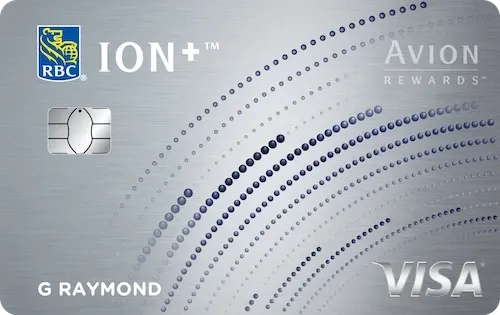
Every points setup needs a workhorse, the card that quietly earns on the boring weekly spending while the flashier cards get the glory. In the RBC ecosystem, the ION+ is that card. For $4 a month it pays 3x Avion points on groceries, dining, gas, transit, streaming and most of the other recurring lines on a normal monthly budget, with no caps and nothing to activate.
The honest catch: ION+ points are worth much less on their own, and the card does nothing for you at the airport. It is a points collector, not a travel card. But pair it with a premium Avion card like the Avion Visa Infinite and the same points unlock the flight chart and airline transfers, which is where this $48 card starts earning far above its fee.
Welcome offer
The ION+ is currently offering up to 28,000 Avion points for applications received by November 4, 2026, the largest welcome bonus this card has ever carried.
It comes in three pieces: 7,000 points on approval, another 14,000 points once you spend $1,500 in the first six months, and a final 7,000 points at your first card anniversary. RBC values the full haul at up to $200 in gift cards, and it stretches well past that if you move the points to a premium Avion card (more on that below).
The spend requirement is about as gentle as they come: $1,500 over six months works out to $250 a month, less than most grocery bills. The anniversary piece only asks you to keep the card into year two, which at $48 is not a hard ask.
Fees & eligibility
The ION+ runs $48 a year, which RBC bills as $4 a month, and additional cards are free. There is no first-year waiver, though students under 25 with an eligible RBC student banking account can have the fee rebated each year.
There is also no minimum income requirement, which makes this one of the easiest rewards cards in Canada to actually get approved for. The usual reminder applies: the purchase rate is 20.99%, so the points only make sense if you clear the balance every month. And note what the fee does not buy you: purchases in a foreign currency still carry the standard 2.5% foreign transaction fee.
Earning rewards
The earn side is the whole pitch. The ION+ pays 3 Avion points per dollar on groceries, dining and food delivery, gas and EV charging, daily transit and rideshare, and streaming, digital gaming and other digital subscriptions. Everything else earns 1 point per dollar.
Read that category list again: for a lot of people under 35 it covers nearly every recurring expense in the budget. Transit and EV charging are still rare bonus categories on Canadian cards, and unlike the Amex Cobalt there is no monthly or annual cap on the accelerated earning.
The Cobalt is the fair comparison. It earns 5x on food, but only 2x on gas, costs about $192 a year, and is an American Express. The ION+ trades the higher food rate for a broader category list, a $48 fee and take-it-anywhere Visa acceptance.
Redeeming rewards
Here is the part RBC does not put on the billboard: Avion Rewards has membership tiers, and the ION+ on its own puts you in Avion Premium, not the top one. At Premium, points redeem for gift cards starting at 1,400 points for $10 (about 0.7 cents each) and cover travel at a flat rate of roughly 0.58 cents per point. Fine for a $48 card, but nothing special.
The unlock is simple. Hold a premium Avion card as well (the Avion Visa Infinite, Avion Visa Platinum or Avion Visa Infinite Privilege) and you sit in the Avion Elite tier, where points move over from your ION+ instantly, free and 1:1. Elite points can book through the Air Travel Redemption Schedule, a flight chart that regularly returns around 2 cents per point on short-haul tickets, and can transfer to airline partners including British Airways Avios, Cathay Pacific Asia Miles, American Airlines AAdvantage and WestJet Rewards, where a sweet-spot booking can beat even that.
So think of the ION+ as an earning engine for someone in, or headed toward, the wider Avion system. If this will be your only card, value the points at the lower standalone rate and judge it on that basis. It still holds up, but the pairing is where it gets interesting.
Perks & benefits
Nobody gets this card for the perks, but a few are worth real money. Mobile device insurance up to $1,000 covers a phone bought on the card against loss, theft, damage and breakdown for two years, coverage that usually starts on much pricier cards. New cardholders get six months of DoorDash DashPass, and linking the card at Petro-Canada saves 3 cents per litre plus 20% more Petro-Points, which stacks with the card's own 3x on gas.
Be clear about what is missing: there is no lounge access, effectively no travel insurance, and the 2.5% foreign transaction fee applies abroad. That is deliberate. The ION+ keeps its fee at $48 by skipping the airport-facing extras and leaving them to the premium Avion cards it is designed to sit beside.
Insurance
This is the thinnest section on the page, and you should know that going in. The ION+ carries no travel medical, no trip cancellation and no flight delay coverage. What you get is shopping-side protection: purchase security for 90 days against theft, loss or damage, an extended warranty that adds up to an extra year, and the mobile device insurance above. If you travel more than once or twice a year, plan on a standalone travel policy or a companion card that carries the coverage.
My take
If your spending looks like groceries, takeout, gas and a stack of subscriptions, this is the cheapest way in Canada to earn serious points on all of it.
On its own, the ION+ is a good card with a modest ceiling: broad 3x earning, points worth around 0.6 to 0.7 cents each, no travel perks. Paired with an Avion Visa Infinite, it becomes something better, the budget engine feeding a premium program. That is how I would run it: the ION+ on the daily categories, the premium Avion card for the insurance, the flight chart and the transfers. Get it if you want maximum points per dollar of annual fee, or if you are building toward the Avion system. Skip it if you want one card that does everything, especially travel; the FX fee and the missing insurance will bite, and something like the Scotiabank Passport covers those gaps for $150.
The good
- 3x on a huge everyday category list
- No caps on bonus earning
- $48 fee and no income requirement
The catch
- Points worth far less without an Avion pairing
- 2.5% FX fee and no travel insurance