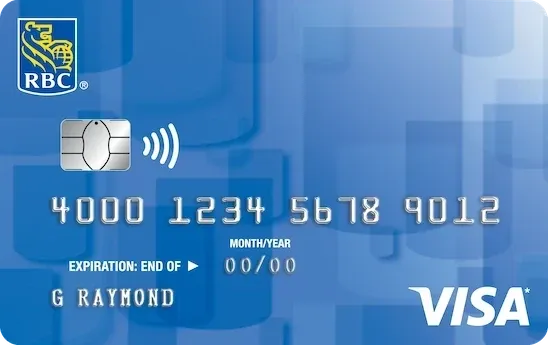
This is RBC's low-rate card, and the numbers that matter are 12.99% on purchases and 14.99% on cash advances, balance transfers included, against 20.99% and 22.99% on RBC's no-fee ION Visa. I'd hand it to someone carrying a balance they want to pay down, especially right now, with 0.99% on transferred debt for the first 10 months and no fee in year one.
The trade-off is a $20 fee from year two and nothing back: no points, no cash back, and purchase cover as the only insurance. If you clear your statement every month, the low rate never helps you, and a no-fee rewards card is the better pick.
Welcome offer
RBC's current offer is a 0.99% introductory interest rate for the first 10 months on balance transfers, plus the $20 annual fee waived for the first year, verified on RBC's page on October 15, 2026. You need to apply by November 4, 2026, and the intro rate is only for applications submitted through RBC's online channels.
The 0.99% covers every cash advance, not only balance transfers: ATM withdrawals, cash-like transactions and bill payments that are not pre-authorized all qualify, while purchases stay at the regular 12.99%. Each cash advance carries a $5 fee, interest runs from the day of the advance, and the rate lasts for the first 10 full statement periods.
When the period ends, any balance left from the offer moves to the cash advance rate on your statement. A missed minimum payment that is not caught up before the next statement, or a switch to another RBC card, ends the offer early. The fee waiver is not open to anyone who already holds an RBC personal credit card.
Treat the 10 months as a payoff plan: divide the transferred balance by 10 and pay at least that much each month, so nothing is left when the rate moves to 14.99%. If you also put purchases on the card, RBC splits payments above the minimum proportionally across your balances, so you cannot aim them at one balance first.
Fees & eligibility
The card costs $20 a year, waived for the first year under the current offer if you apply by November 4, 2026 and don't already hold an RBC personal credit card. Additional cards are free, and RBC lists no minimum income.
The rates are fixed at 12.99% on purchases and 14.99% on cash advances, a category that includes balance transfers. Cash advances have no interest-free period, so interest starts the day you take one, and RBC's FAQ puts the fee at $5 per cash advance. The product page does not print a grace period, a minimum payment or a foreign transaction fee.
The fee pays for itself once you carry enough debt. Against the 20.99% purchase rate on RBC's no-fee ION Visa and Visa Platinum, the 8-point gap saves about $8 a year for every $100 you carry, so the $20 fee is covered once your average balance is above roughly $250. The cash advance gap is the same 8 points (14.99% against 22.99%).
Perks & benefits
The main perk is the 0.99% introductory rate on cash advances and balance transfers for the first 10 statement periods, along with the first year's fee waived. Beyond that, the card gets RBC's standard partner offers: link it to Petro-Points to save 3 cents per litre at Petro-Canada and earn 20% more Petro-Points, to Triangle Rewards for 3x Canadian Tire Money, and to Rexall's Be Well program for 50 Be Well points per $1.
You also get a 3-month complimentary DashPass subscription when you add the card to DoorDash before November 16, 2028. There is no lounge access, no travel credit and no included travel insurance; RBC sells travel cover as an optional add-on.
Insurance
Insurance is limited to purchase security and extended warranty, underwritten by RBC Insurance Company of Canada. Items bought with the card are covered against loss, theft or damage for 90 days, up to $50,000 per account per calendar year, and the manufacturer's warranty is doubled by up to 1 extra year, to a combined maximum of 5 years.
The cover is excess insurance, so it pays only after any home or other insurance you have. There is no travel insurance of any kind, no rental car cover and no mobile device insurance.
My take
I'd get this card if you're carrying a balance you want to move and pay down within 10 months; if you pay in full every month, I'd skip it for a no-fee rewards card.
The pitch is simple: 0.99% on transferred debt for 10 months with no fee in year one, then a fixed 12.99% on purchases. On the math RBC's own savings calculator uses, a $4,000 balance costs about $33 in interest over 10 months at 0.99%, against about $700 at 20.99%, before the $5 transfer fee.
The catches sit in the footnotes: the intro rate charges interest from day one, payments are split across balances rather than applied to the costliest one, and one missed payment ends the deal. After year one you pay $20 for a card that only does one job, so I'd keep it while you're actually carrying debt.
The good
- Fixed 12.99% on purchases, 14.99% on cash advances
- 0.99% on balance transfers for 10 months
- First-year $20 fee waived
The catch
- No rewards of any kind
- Intro rate charges interest from day one, plus $5 per advance
- $20 fee from year two and purchase cover only